What inspired the creation of Reused Remade, and how did the idea of repurposing textiles into hotel products come about?
Like most of you, we are concerned about the environment and the state of our planet. At one point, we felt the need to take action in order to contribute to a more sustainable world. We want to be able to look our children in the eye and tell them that we actually do something good for our planet, so that they can have a chance to swim in clean oceans, eat fish and enjoy nature’s wonders.
When listening to the outcome of the UN Paris Climate Change Conference in 2015, and understanding the damage and impact that plastic bags have on our environment, especially our oceans, the thought of a more sustainable bag started to grow. In 2016 we searched and found an alternative material, a neglected high-quality textile – discarded hotel bed linen – and the company Reused Remade was born.
Early on we realized that offering a substitute to single use bags of plastic or paper was not the only win. An even bigger win is the fact that can we offer a material that substitutes both virgin or recycled textiles, and by doing so is able to save up to 64% of the climate and environmental impact of a textile product. A reusable bag at a very low climate and environmental cost.

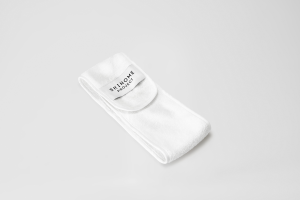
We then also started to reuse terry cloth for other hotel products, as seen above…
What steps do you take to ensure sustainability throughout your supply chain?
From the start we have had a minimalistic approach in regards to packaging as well as solid belief in a fair supply chain.
We choose our partners carefully. We only work with laundry service companies, stitching factories and printing facilities that follow ethical and fair production practices. For example, our production facility in Pakistan is Sedex certified and all chemicals used in the printing process are GOTS certified. A bonus of working with pre-used and washed textiles is the absence of harmful chemicals in the textiles, thus improving the working condition at the factory. All waste from our production in Pakistan is sold to a local GRS certified recycling factory and the earnings are reinvested in the factory to improve working conditions.
The design of packaging of our products is founded in “less is more” and the paper used is FSC certified. We are currently evaluating the possibility of exchanging our polybags of recycled plastic to polybags made from repurposed production waste. The aim is to decrease the use of plastic and at the same time increase the use of our material.
Could you share any success stories or partnerships that highlight the impact of Reused Remade?
In 2023/24 we launched a joint project with the Swedish tour operator VING, part of Nordic Leisure Travel Group. By taking advantage of our upcycling solution, we helped VING to turn more than 19 tons of their discarded bedlinen and terry towels into 150 000 articles. By reusing their own materials, instead of ordering products of virgin material, VING gained a top storytelling for their brand, gifts for top client, retail products to be sold at their resort in Europe and at the same time contributing to save up to 700 tons of CO2 emissions.
 Photo credit: Mats Högberg, Ving.
What are your long-term goals for Reused Remade, and how do you see the role of upcycled products evolving in the hotel industry?
Our mission is to help to increase the resource efficiency of hotel textiles and decrease the textile waste generated by the hospitality industry. In collaboration with the industry, we want to work together to maximize the upcycling potential of their discarded textiles and be part of the transition away from unnecessary use of virgin materials. With upcoming regulations regarding textile within the EU, the hospitality industry will need to acknowledge their part and Reused Remade can be a partner in the change for a more sustainable hotel operation. We believe that taking responsibility for the industry’s impact on the environment and climate will be a must in order for the hotels to be relevant, build brands and show the guests their commitment to a better future for all. The uniqueness of upcycling hotel textiles lies in the simplicity of communication, the strong link it has to the hotel industry and the range of products that can be exchanged from virgin to upcycled.